
One Dropper or Two: Reading the Range on the Gelatide Label
The label allows one or two full droppers and names no starting dose. Caffeine, capsicum and a two-week plan settle it.
Gelatide Official Website›Blog›Guarana Seed Extract
The Gelatide blog
Guarana seed extract is not simply a caffeine source. Per the NIH’s LiverTox monograph on the plant, its major active compounds are caffeine and two related xanthine alkaloids, theobromine and theophylline. A 2024 crossover trial found guarana extract edged out placebo in a cycling time trial, but the same researchers concluded they could not determine whether guarana adds anything beyond the caffeine dose it happened to contain.
Below: what Paullinia cupana is, what the human research says its three xanthines do differently, and how far that reaches toward a Gelatide dropper.
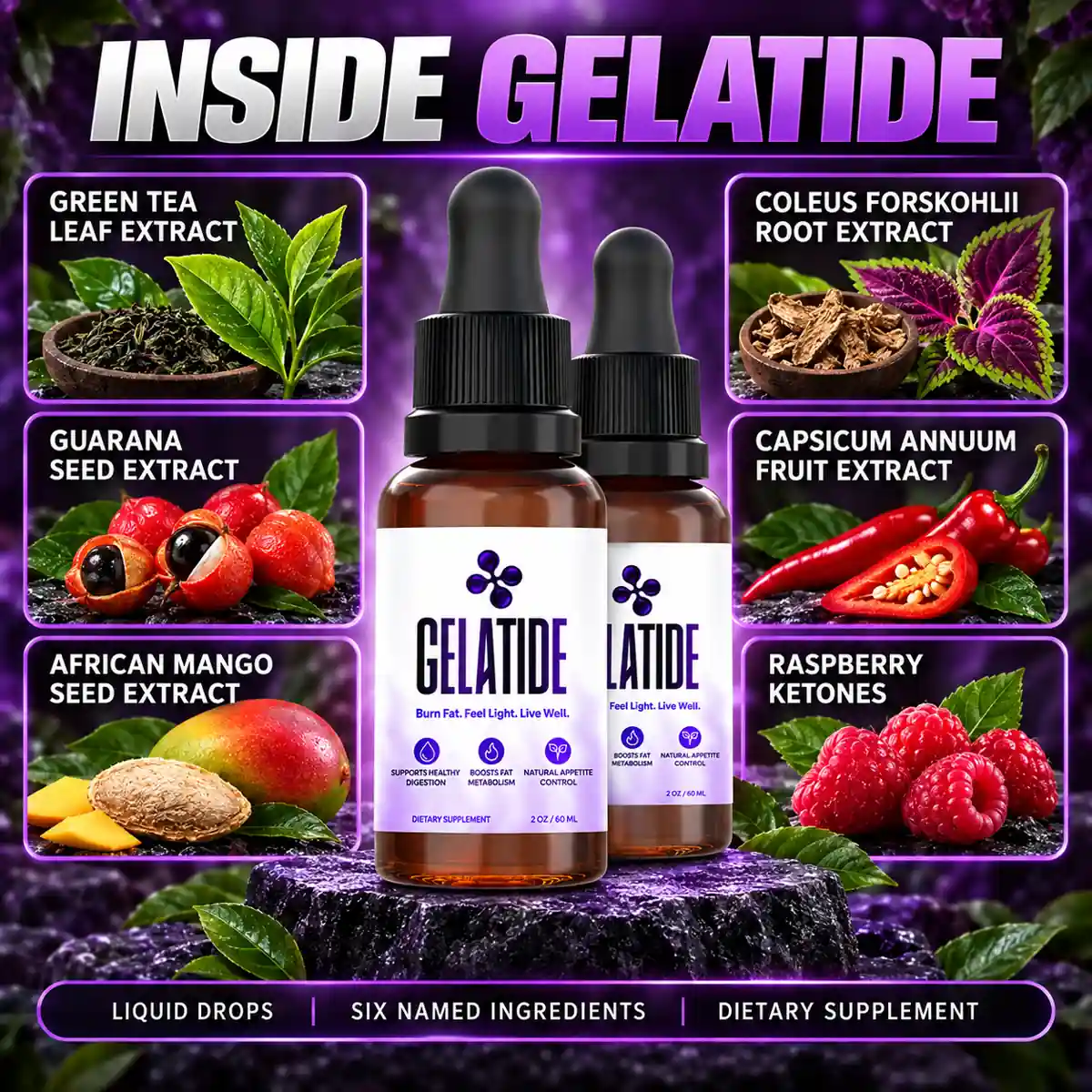
Gelatide’s front label and its INSIDE GELATIDE ingredient card, per the site’s own supplement facts page, name six ingredients: Green Tea (Camellia sinensis) Leaf Extract, Guarana (Paullinia cupana) Seed Extract, African Mango (Irvingia gabonensis) Seed Extract, Coleus Forskohlii Root Extract, Capsicum Annuum Fruit Extract, and Raspberry Ketones. None of the six carry a printed milligram amount; the seller’s artwork lists names only, with no Supplement Facts panel, serving size or caffeine total published on any of the label images supplied for this product.
Guarana sits second on that list, and alongside green tea leaf it is one of two named ingredients in the formula that can contribute caffeine. This post is about guarana specifically: not how much caffeine a dropper might contain, which the label does not say, but what the plant itself is understood to contain, and what published research says that mixture of compounds does, beyond a simple caffeine count.
Guarana comes from the seeds of Paullinia cupana, a climbing shrub native to the Amazon basin. The U.S. National Institute of Diabetes and Digestive and Kidney Diseases keeps a monograph on the plant inside LiverTox, its clinical reference on drug-induced liver injury, and it is a useful place to start because it is short, plain and specific. Guarana, it says, is prepared as an extract of “roasted and pulverized seeds,” and has a long history of traditional use in Brazil “as a stimulant and tonic to treat fatigue, decrease hunger and thirst and for headaches and dysmenorrhea.”
The same monograph states what the seeds actually contain, in one sentence worth quoting in full: their “major active components are caffeine and other xanthine alkaloids such as theophylline and theobromine.” That single line is the reason this post exists. A label that simply says “guarana” is naming a seed whose own published chemistry is a small family of related stimulant compounds, not a single one.
LiverTox’s safety note for the same monograph is worth reading alongside that chemistry: “In conventional doses, guarana has few side effects and has not been linked to episodes of liver injury or jaundice.” That is a more favorable liver-safety record than the one this domain’s own review of green tea extract and the liver describes for concentrated green tea catechins, the other named source of caffeine on the Gelatide label, and it is a useful contrast: the two caffeine-adjacent ingredients on this label do not carry the same published safety story.
Caffeine, theobromine and theophylline belong to the same small family of plant compounds called methylxanthines: purine-based alkaloids that share a core ring structure and differ mainly in which positions on that ring carry a methyl group. The difference sounds minor on paper. In practice, each compound has its own published pharmacology, and none of the three behaves as a simple substitute for the others.
Caffeine is the most familiar of the three and the dominant compound in coffee. Theobromine is the compound that dominates in cacao, which is why chocolate has a mild, longer, less jittery stimulant effect than a cup of coffee of similar mass. Theophylline is best known today in its purified pharmaceutical form, historically prescribed at controlled clinical doses to relax airway muscle in asthma and related conditions — a use built on a different, well-established branch of its pharmacology that has nothing to do with a supplement dropper and is not what this post is about.
What LiverTox’s monograph makes clear is that guarana’s seeds are distinctive for carrying a mixture of all three rather than being dominated by one, the way coffee is dominated by caffeine and cacao by theobromine. That is the specific, sourced sense in which guarana is more than a caffeine source: its published composition is the combined profile of three related but pharmacologically distinct xanthines, not one.
The clearest human comparison of caffeine against theobromine comes from a 2011 trial published in Physiology & Behavior, Differential contributions of theobromine and caffeine on mood, psychomotor performance and blood pressure. Researchers gave 24 healthy female volunteers, in a crossover design, one of four treatments: 700 mg of theobromine, 120 mg of caffeine, the combination of both, or a placebo. Mood was scored on the Bond-Lader visual analog scale, psychomotor performance on the Digit Symbol Substitution Test, and blood pressure was measured before dosing and again at one, two and three hours afterward.
The two compounds pulled apart. Theobromine alone lowered self-reported calmness by the third hour and lowered blood pressure relative to placebo at the first hour. Caffeine alone raised self-reported alertness at every timepoint measured and raised contentedness at one and two hours, along with raising blood pressure at the first hour. The combination of both behaved like caffeine alone on mood, but did not raise blood pressure the way caffeine alone did. Neither compound changed scores on the psychomotor test. The authors’ own reading was that caffeine may act more through the central nervous system to drive alertness, while theobromine may act more through peripheral physiology, tentatively.
| Caffeine (120 mg) | Theobromine (700 mg) | |
|---|---|---|
| Self-reported alertness | Increased, hours 1–3 | No significant change |
| Self-reported calmness | No significant change | Decreased at hour 3 |
| Blood pressure | Increased at hour 1 | Decreased at hour 1 |
| Psychomotor test score | No significant change | No significant change |
| Proposed mechanism | More central nervous system | More peripheral physiology |
Two things are worth holding onto from this trial. First, it tested isolated compounds at fixed milligram doses, 700 mg of theobromine and 120 mg of caffeine, not a guarana extract, and not doses that map onto a Gelatide dropper in any way the label discloses. Second, it is the reason lumping “guarana’s effects” into a single caffeine figure misses something real: the plant’s second-most-discussed compound moved blood pressure in the opposite direction from caffeine, in the one controlled human comparison available.
The most direct test of guarana itself, rather than its isolated compounds, is a 2024 study in the International Journal of Sport Nutrition and Exercise Metabolism, Guarana (Paullinia cupana) but Not Low-Dose Caffeine Improves Cycling Time-Trial Performance Versus Placebo. Eleven endurance-trained cyclists and non-cyclists completed a double-blind crossover: on separate occasions each took 100 mg of caffeine, 500 mg of guarana extract (which the researchers confirmed contained 130 mg of caffeine), or a placebo, then rode a 60-minute fixed workload followed by a 15-minute time trial.
Oxygen uptake, heart rate, respiratory exchange ratio, blood glucose and lactate did not differ meaningfully between the three arms during the fixed-workload portion. Guarana did produce a lower rating of perceived exertion than caffeine at the 50-minute mark, though not a lower rating than placebo. Over the 15-minute time trial, work output was higher for guarana than for placebo (241.4 kJ versus 232.1 kJ, a small effect), driven mostly by a stronger early pace in the first 11 minutes. Caffeine’s result, 232.3 kJ, sat almost exactly on top of placebo’s and was not statistically different from either guarana or placebo. Strength loss after exercise did not differ meaningfully between any of the three arms.
| Guarana extract | Caffeine only | Placebo | |
|---|---|---|---|
| Dose given | 500 mg extract, 130 mg caffeine | 100 mg caffeine | Inert placebo |
| 15-minute time-trial work | 241.4 kJ | 232.3 kJ | 232.1 kJ |
| Versus placebo | Higher, p = .046 | Not significant | – |
| Versus each other | Not significant vs. caffeine, p = .079 | Not significant vs. guarana | – |
| Perceived exertion at 50 min | Lower than caffeine | Higher than guarana | No difference from either |
Read plainly, guarana beat an inert placebo by a small amount in this trial. Caffeine alone did not clearly beat placebo. But guarana also did not clearly beat caffeine. That three-way pattern, in a small 11-person crossover, is the entire finding, and the authors were careful about what it does and does not show.
The trial has a built-in limitation that its own authors named directly. The guarana arm delivered 130 mg of caffeine; the caffeine-only arm delivered 100 mg. That 30 mg gap is large enough, on its own, to plausibly explain why guarana edged out placebo while the smaller caffeine dose did not clearly do the same — without any help from theobromine, theophylline or anything else in the seed. In the study’s own words: “Due to issues related to identical matching of dosage, whether GUA confers additional benefits beyond its CAF content cannot be determined at present.”
The lower perceived-exertion score for guarana against caffeine at the 50-minute mark is the one result that does not reduce neatly to caffeine content, since the guarana arm had more caffeine, not less, yet felt easier to the same riders at that timepoint. That is worth noting as a genuinely open thread. It is also a single secondary measure, in one small trial, and not a result the authors treated as proof that theobromine or theophylline did anything measurable. The honest summary is the one the researchers gave: guarana produced a small benefit over an inert placebo, and whether that benefit is caffeine by another name, or something the seed’s other xanthines contribute, is not yet settled science.
None of the research above can be matched to a Gelatide dropper, because the label does not disclose how much guarana seed extract is in one, let alone how much caffeine, theobromine or theophylline that extract might carry. Green tea leaf, the label’s other caffeine-related ingredient, is undisclosed by amount as well; the green tea extract and the liver post covers that ingredient’s own research and its own caution.
With two undisclosed caffeine-related ingredients rather than one, and no printed total, the practical approach this domain’s own dosing coverage lands on for the label’s one-or-two-dropper range applies here as much as anywhere: start with a single dropper, notice how it feels against your normal coffee or tea intake, and only consider a second once you know your own response. The one dropper or two post walks through that reasoning in full, including why capsicum and timing matter alongside the caffeine question.
If you are sensitive to stimulants, it is worth remembering that guarana’s published chemistry is three xanthines, not one, even though only the caffeine total usually gets counted. A conservative start accounts for that, even without a milligram figure to work from.
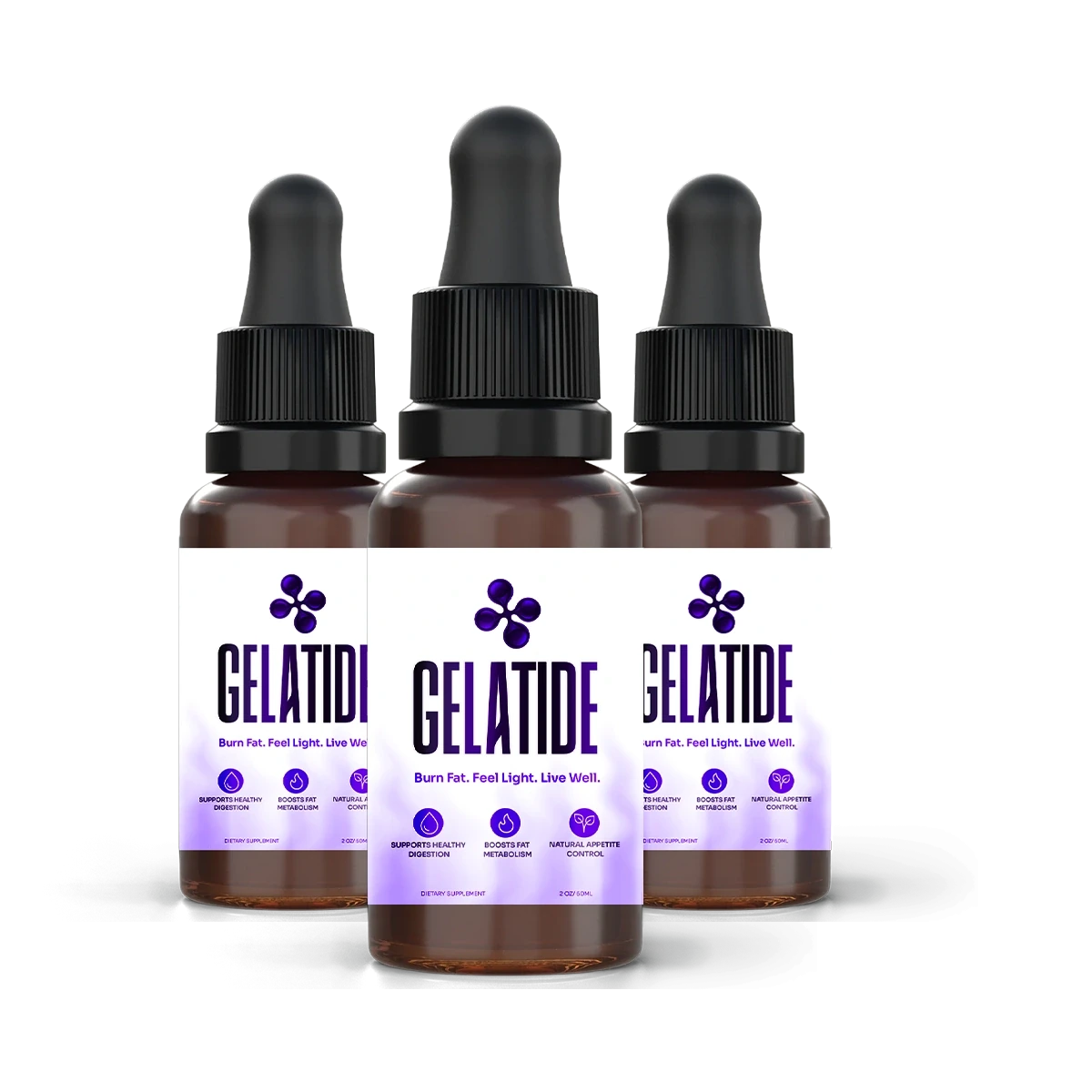
Shake well, take one or two full droppers a day, and give the routine a few weeks before judging it. Every order carries 60 days from the date of purchase to decide.
6 bottles $294 · 3 bottles $207 · 2 bottles $158 + $9.99 shipping
Order Gelatide60 days from purchase to claim · orders through the checkout only
Guarana seed extract is a genuinely different ingredient from a plain caffeine tablet. Per NIH’s LiverTox monograph, its seeds carry caffeine alongside theobromine and theophylline, and the one controlled human trial to compare theobromine against caffeine directly found the two compounds moved mood and blood pressure in different directions. The one trial to test guarana extract itself against a caffeine-matched comparison found a small edge for guarana over placebo, but could not rule out that the edge came from guarana simply containing more caffeine than the comparison dose. Gelatide names guarana seed extract as one of six ingredients without a milligram amount, so the fair conclusion is that guarana brings a published, multi-compound stimulant chemistry to the formula, and that exactly how much of it a dropper delivers is not something the label answers.
Guarana, green tea and other xanthine-bearing ingredients can affect heart rate, blood pressure and sleep, and can interact with stimulant sensitivities, some heart-rhythm conditions and certain medications. If you are pregnant, nursing, manage a cardiovascular condition or take prescription medicine, talk to a doctor or pharmacist before adding a guarana-containing supplement. Gelatide is not intended to diagnose, treat, cure or prevent any disease.
Keep reading the blog
More questions the label raises, each followed to the research.
The label allows one or two full droppers and names no starting dose. Caffeine, capsicum and a two-week plan settle it.
Brewed tea and concentrated extract are different exposures. What the USP review found, the three warning signs, and the habit that matters.
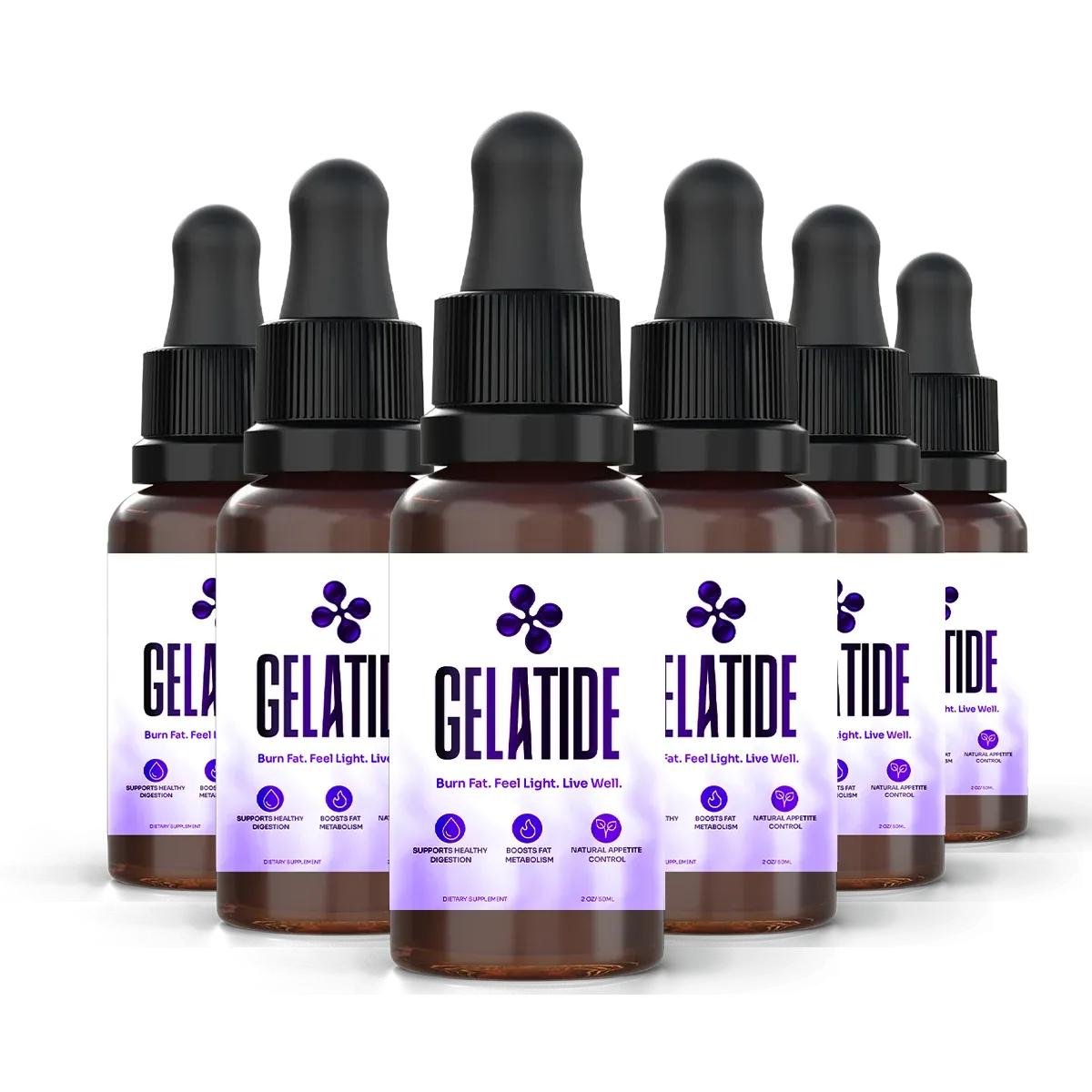
Three to six weeks against the ingredient trials, the three pack lengths and a 60-day window.