
One Dropper or Two: Reading the Range on the Gelatide Label
The label allows one or two full droppers and names no starting dose. Caffeine, capsicum and a two-week plan settle it.
Gelatide Official Website›Blog›Capsicum and Digestion
The Gelatide blog
In a double-blind trial, 30 adults with functional dyspepsia took either 2.5 g of red pepper powder a day before meals or a placebo for five weeks. From the third week the red pepper group scored lower on pain, fullness and nausea, and by the end their symptom scores had fallen about 60 percent, against under 30 percent on placebo.
Below: how the trial worked, why a chilli might calm a stomach, and how far it reaches to a Gelatide dropper.
Dyspepsia is the medical name for recurring discomfort in the upper abdomen: pain or burning below the breastbone, an uncomfortable fullness after meals, feeling full too early, and sometimes nausea. It is called functional when a clinician has looked for a structural cause, such as an ulcer, and found none.
That makes it common, genuinely uncomfortable and hard to treat, and it is why a trial in functional dyspepsia is useful for reading a digestion label. The symptoms it measures, fullness and upper-stomach discomfort after food, are the everyday ones people mean when they say their digestion feels off. The difference is that the trial’s volunteers had been examined and diagnosed first.
The study came from the Department of Internal Medicine at the University of Bologna and was published in Alimentary Pharmacology and Therapeutics in 2002 as The treatment of functional dyspepsia with red pepper. It is small, and it is carefully built, which is why it is worth reading closely rather than quoting in one line.
The researchers recruited 30 patients with functional dyspepsia. They excluded anyone with gastro-oesophageal reflux disease or irritable bowel syndrome, so the symptoms being measured belonged to the upper stomach and not to two conditions that often travel with it. Every patient went through a two-week washout first, a period with no treatment, so that the starting scores reflected their ordinary state.
Then the group was split at random. Fifteen took 2.5 g of red pepper powder a day, before meals; fifteen took a placebo. Neither the patients nor the researchers knew who had which. The treatment ran for five weeks.
Each patient kept a diary sheet and scored, every day, the intensity of each symptom and of the whole picture. The researchers averaged the daily scores into weekly figures and then across the whole treatment period. Four measures carried the result: the overall symptom score, epigastric pain, fullness and nausea.
For the first two weeks of treatment, the two groups did not separate. From the third week the red pepper group’s scores sat significantly below the placebo group’s on overall symptoms and on pain, fullness and nausea, and the gap held to the end.
By week five the red pepper group’s scores had fallen by about 60 percent. The placebo group improved too, which is normal in any symptom trial, but by less than 30 percent.
| Red pepper group | Placebo group | |
|---|---|---|
| Patients | 15 | 15 |
| Each day | 2.5 g of red pepper powder, before meals | A placebo, before meals |
| Length | 5 weeks, after a 2-week washout | 5 weeks, after a 2-week washout |
| First week with a significant gap | Week 3 | – |
| Symptoms significantly lower | Overall score, epigastric pain, fullness, nausea | – |
| Fall in symptom score by the end | About 60% | Less than 30% |
Two details are easy to miss. The first is the delay: whatever red pepper did, it did not show in the first fortnight. The second is the placebo response. Some of the improvement anyone feels in the early weeks of a digestive product comes from paying attention to the symptoms and expecting them to ease, and the placebo arm is how a trial separates that from the ingredient.
It sounds backwards. Chilli is famous for making things burn, and plenty of people with a sensitive stomach avoid it. The authors’ explanation turns on what capsaicin, the compound that makes chilli hot, does to nerves.
Capsaicin binds to a receptor on small sensory nerve fibres, the C-fibres that carry burning and aching signals. The first contact switches them on, which is the heat you feel. Repeated contact does the opposite: the fibres become less responsive, a process called desensitisation. The authors proposed that daily red pepper desensitised the pain-signalling C-fibres in the stomach, so the same meal produced fewer uncomfortable signals.
That is a proposed mechanism, written as probable in the paper, not something the trial measured directly. It does fit the timing. Desensitisation takes repeated exposure, and the effect in the diaries appeared only after two weeks of daily red pepper.
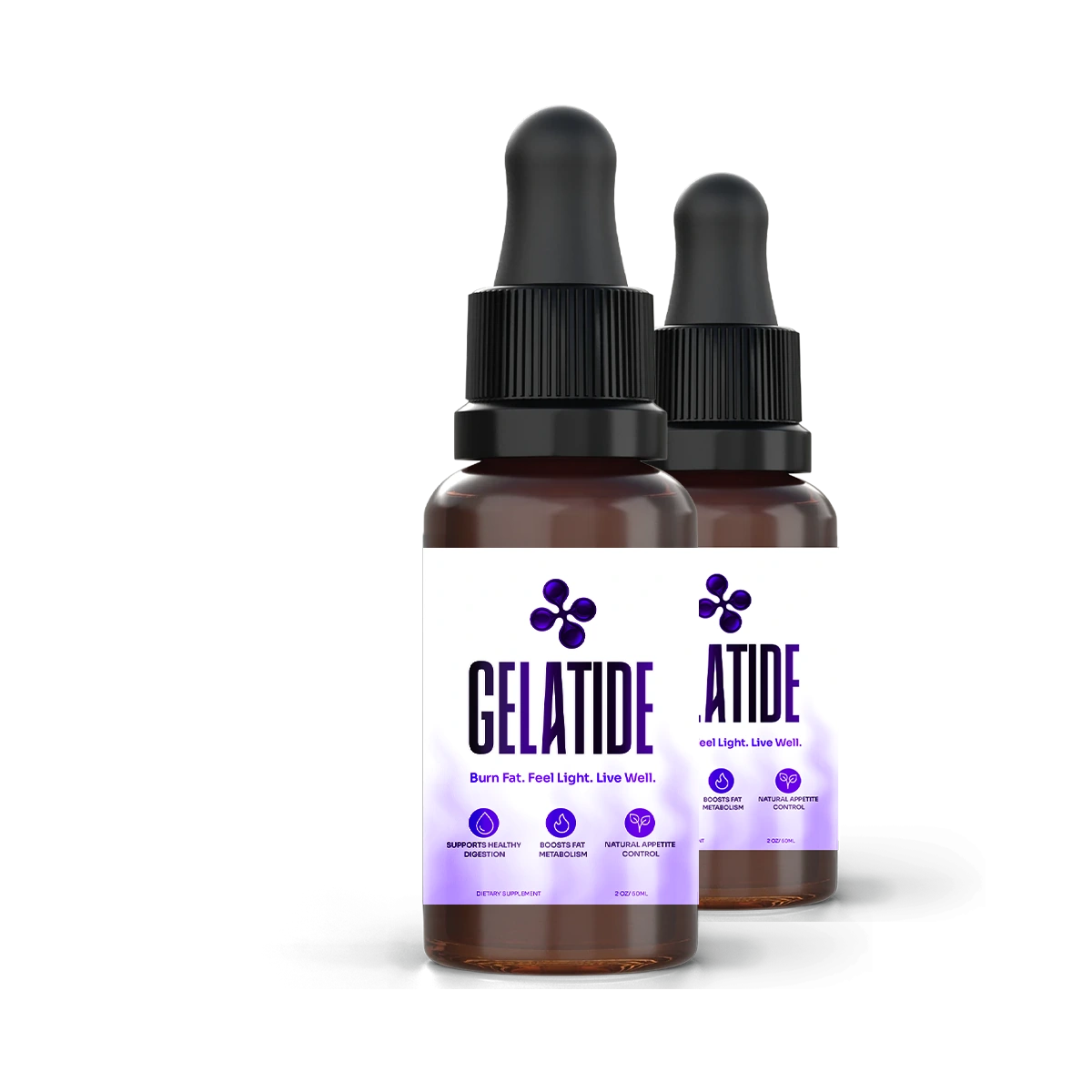

Shake well, take one or two full droppers a day with food, and give it past the third week. Every order carries 60 days from the date of purchase to decide.
6 bottles $294 · 3 bottles $207 · 2 bottles $158 + $9.99 shipping
Order Gelatide On The Official Website60 days from purchase to claim · lot GEL-26/GE-4762 · orders through the checkout only
The trial is the most relevant human study for the digestion line on the Gelatide label, and it cannot be carried straight across to a dropper. The table sets the two side by side.
| The 2002 trial | Gelatide drops | |
|---|---|---|
| Form | Red pepper powder | Capsicum annuum fruit extract in a liquid |
| Amount | 2.5 g a day | Read on the bottle’s Supplement Facts panel |
| Timing | Before meals | Daily; the label sets no time |
| Alongside | Nothing else | Five more named ingredients, including caffeine-bearing guarana |
| Who took it | Adults diagnosed with functional dyspepsia | Healthy adults 18 and over |
| Length | Five weeks | Your choice, inside a 60-day refund window |
Two rows matter most. An extract is a concentrate, so a small volume can carry more capsaicinoids than a gram of powder, or fewer, depending on how strong the extract is. The seller’s artwork names capsicum without an amount, so the panel on the bottle is the only place to start that comparison. And the trial recruited people with a diagnosed condition, while the label is written for healthy adults supporting normal digestion. The fair summary is that capsicum is the right ingredient to look at for digestion, and that the size of any effect in a dropper is unknown.
Capsicum’s research does not stop at digestion. Two other label lines, Natural Appetite Control and Boosts Fat Metabolism, have pooled trials behind them for capsaicinoids, the family of heat compounds capsaicin belongs to.
A 2014 meta-analysis of energy intake trials screened 74 trials, kept 10 and pooled 8, covering 191 participants. Capsaicinoids taken before a meal cut the calories eaten at that meal by about 74 kcal. The authors flagged high heterogeneity, meaning the trials disagreed a good deal, and estimated that about 2 mg of capsaicinoids was the smallest dose that registered.
A 2021 meta-analysis of 13 trials found that capsaicinoids and their milder cousins, capsinoids, raised resting metabolic rate by about 34 kcal a day against placebo, with a shift toward using fat as fuel. A 2018 meta-analysis of human studies found energy expenditure rose by about 59 kcal a day, and noticed that the rise appeared only in studies whose volunteers had an average body mass index above 25.
These are small numbers, counted in calories a day, from capsaicinoid doses the studies stated. They describe what the compound does in a trial, not what a Gelatide dropper will do.
Read together, the research suggests four practical habits, and none of them needs a milligram figure.
For the directions step by step, see how to take Gelatide; for the other five ingredients, the ingredients page; for the packs and cost per day, pricing.

One small, well-designed trial found that red pepper eased the symptoms of functional dyspepsia from the third week, and by about 60 percent at five. It is real evidence, pointed at the right label line, and it is also one trial of a powder in people with a diagnosis. Gelatide carries capsicum as one of six named ingredients, so the fair expectation is a routine worth trying for several weeks inside the refund window, not a guaranteed result. The digestion drops guide sets the trial beside the rest of the category.
Functional dyspepsia is a diagnosis a clinician makes after other causes are ruled out. New, severe or persistent stomach symptoms, trouble swallowing, vomiting, black stools or weight you did not mean to lose need a doctor, not a supplement. Gelatide is not intended to diagnose, treat, cure or prevent any disease.
Keep reading the blog
Four more questions the label raises, each followed to the research.
The label allows one or two full droppers and names no starting dose. Caffeine, capsicum and a two-week plan settle it.
A men’s trial, a women’s trial and a 2026 trial of the same root. Three results, set side by side, with the reasons they split.
Three to six weeks, from this desk’s order book, laid against the ingredient trials, the three pack lengths and a 60-day window.
Brewed tea and concentrated extract are different exposures. What the USP review found, the three warning signs, and the habit that matters.