Capsicum and Digestion: What a Red Pepper Trial Actually Measured
One small double-blind trial, pointed at the digestion line on the label: what it measured week by week.
Gelatide Official Website›Blog›African Mango and Satiety
The Gelatide blog
Irvingia gabonensis, African mango, has been studied two different ways: as a gram-scale dose of whole seed powder, framed around dietary fiber, and as a milligram-scale seed extract studied for its effect on leptin and adiponectin, the fat cell’s own hunger-signalling hormones. Those are two different mechanisms tested at two very different doses. Gelatide names “African mango seed extract” without a milligram amount, so there is no way to tell which of the two research traditions, if either, describes what is in a dropper.
Below: both mechanisms, the trials behind each, and why the label leaves the question open.
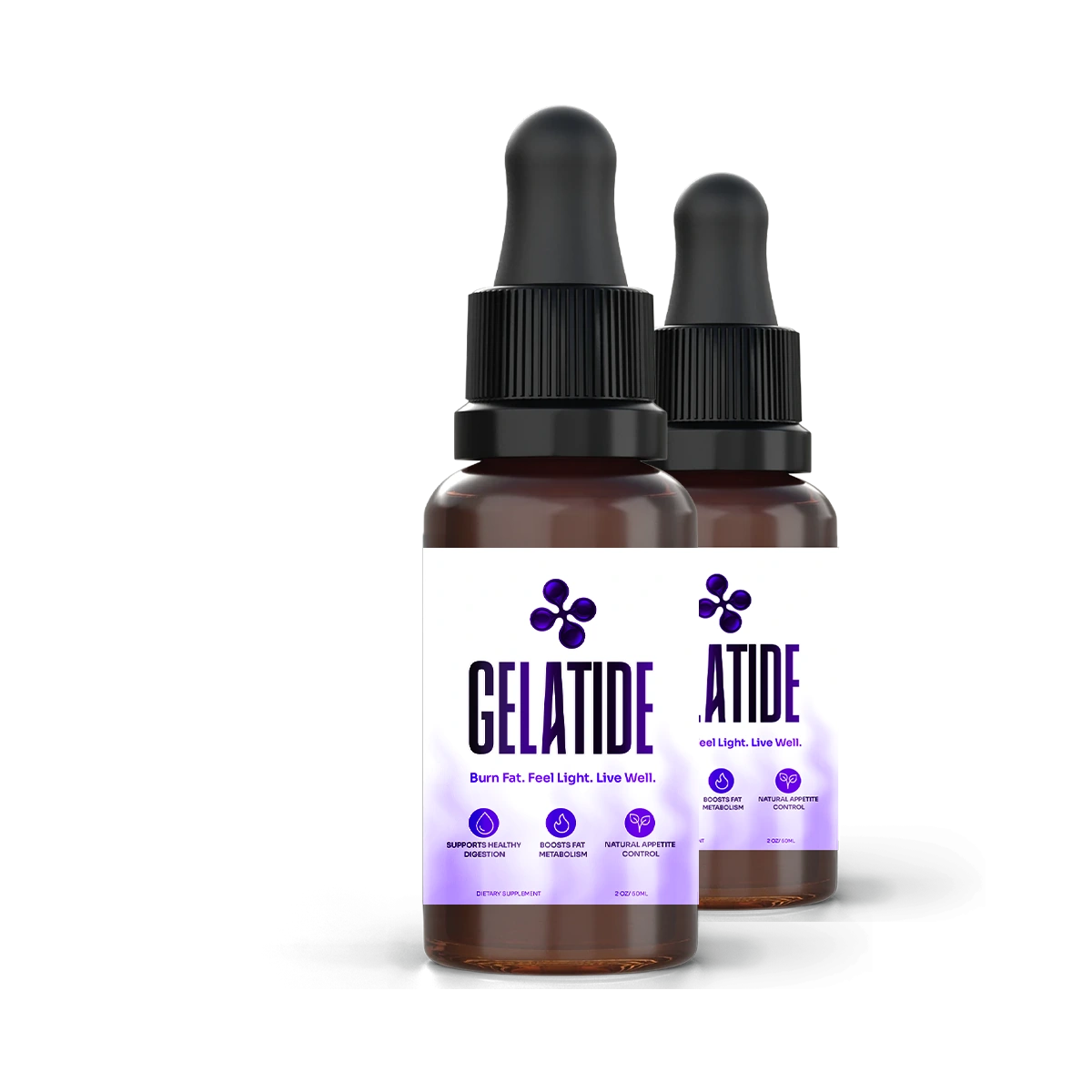
Per the site’s own supplement facts page, Gelatide’s front label and INSIDE GELATIDE ingredient card name six ingredients: Green Tea (Camellia sinensis) Leaf Extract, Guarana (Paullinia cupana) Seed Extract, African Mango (Irvingia gabonensis) Seed Extract, Coleus Forskohlii Root Extract, Capsicum Annuum Fruit Extract, and Raspberry Ketones. None carry a printed milligram amount; there is no Supplement Facts panel or serving-size breakdown on any artwork supplied for this product.
African mango, the seed of Irvingia gabonensis, sits third on that list. It has one of the longer and more specific published research histories of the six, running from whole-seed weight-loss trials in the mid-2000s to a more mechanistic seed-extract line of research a few years later. Those two lines of research do not describe the same thing, and that is what this post is about.

Irvingia gabonensis, known as African mango, African bush mango or dika nut, is a tree native to West and Central Africa. Its seeds have a long food history in the region as a thickener, ground into a paste sometimes called dika bread. That food-use background matters, because it is the starting point the earliest clinical research took: seeds are a source of dietary fiber, and fiber has a long, independent research record in weight management.
Two research groups, working from Cameroon, produced almost all of the published Irvingia weight-management literature between 2005 and 2009. What changed across that period was the preparation being tested. The earliest trial used raw seed powder, taken in gram amounts several times a day. The later work used a proprietary, more concentrated seed extract, given at a fraction of that amount, and shifted its explanation from fiber bulk to a specific set of fat-cell genes. Both lines trace back to the same seed. They are not the same test.
The earlier trial, published in Lipids in Health and Disease as The effect of Irvingia gabonensis seeds on body weight and blood lipids of obese subjects in Cameroon, opens with its own rationale in its first line: “Dietary fibres are frequently used for the treatment of obesity.” Forty obese adults, mean age 42.4 years, were randomized double-blind: 28 received Irvingia gabonensis seed powder, 1.05 g three times a day, 12 received a matching placebo on the same schedule, for one month. Everyone followed a normocaloric diet, checked weekly against a food diary.
At 3.15 g of seed powder a day, the Irvingia group lost 5.26 percent of body weight on average, against 1.32 percent on placebo, a significant difference. Total cholesterol, LDL cholesterol and triglycerides fell and HDL cholesterol rose in the Irvingia group; the placebo group showed no lipid changes at all. The paper’s own framing throughout is a fiber-and-satiety story: a gram-scale dose of seed material, taken before the body absorbs a meal’s full calories.
| Irvingia seed powder | Placebo | |
|---|---|---|
| Subjects | 28 | 12 |
| Preparation | Raw seed powder | Matching placebo |
| Dose | 1.05 g, three times daily (3.15 g/day) | Same schedule |
| Length | One month | One month |
| Body weight change | −5.26% | −1.32% |
| Working rationale | Dietary fiber, stated in the paper’s opening line | – |
The later work moved from raw seed to a named, standardized extract, IGOB131, and moved its explanation from fiber to gene expression. A 2008 laboratory study in the same journal, Inhibition of Irvingia gabonensis seed extract (OB131) on adipogenesis as mediated via down regulation of the PPARgamma and leptin genes and up-regulation of the adiponectin gene, treated murine 3T3-L1 cells, a standard laboratory fat-cell line grown in a dish, not a living animal or person, with the extract for 12 to 24 hours. The extract significantly reduced expression of PPAR gamma, a master gene that drives fat cells to mature, and of leptin, while significantly increasing expression of adiponectin.
A year later, the same extract was tested in people. IGOB131, a novel seed extract of the West African plant Irvingia gabonensis, significantly reduces body weight and improves metabolic parameters in overweight humans, published in Lipids in Health and Disease in 2009, gave 102 overweight or obese volunteers either 150 mg of IGOB131 or a matching placebo, 30 to 60 minutes before lunch and dinner, and followed them for 10 weeks. The IGOB131 group showed significant improvements in body weight, body fat, waist circumference, total and LDL cholesterol, blood glucose, C-reactive protein, and blood levels of both adiponectin and leptin, against no such changes on placebo.
| 2008, 3T3-L1 fat cells | 2009, 102 overweight adults | |
|---|---|---|
| Preparation | IGOB131 extract | IGOB131 extract |
| Setting | Laboratory cell culture | Randomized human trial |
| Dose | Concentration series in the dish | 150 mg, twice daily before meals |
| Length | 12–24 hours | 10 weeks |
| Leptin | Gene expression down-regulated | Blood levels improved vs. placebo |
| Adiponectin | Gene expression up-regulated | Blood levels improved vs. placebo |
Both hormones are made by fat tissue itself, which is why they turn up in obesity research at all. Leptin signals fullness: fat cells release it in proportion to how much fat they are storing, and it is meant to tell the brain that energy reserves are adequate, tempering appetite. In obesity, leptin levels are often already high, but the brain stops responding to the signal as strongly, a state usually described as leptin resistance, so more leptin does not translate into feeling less hungry.
Adiponectin runs in something closer to the opposite direction. It is also released by fat tissue, but its levels tend to be lower in obesity, and higher adiponectin is associated with better insulin sensitivity and more favorable fat metabolism. A supplement studied for its effect on both hormones is being studied for an effect on the body’s own fat-signalling system, not for bulk or fiber content. That is a genuinely different biological claim from “seed fiber slows digestion,” even though both claims trace back to the same plant.
The word printed on the Gelatide label is “extract,” not “seed powder.” That wording points toward the second research tradition, the concentrated IGOB131-style preparation studied at 150 mg twice daily, rather than the first, the raw seed powder studied at 3.15 g a day. The difference in scale between those two doses is roughly twenty-fold. A fiber-and-bulk mechanism, the kind that works by physically slowing digestion or adding volume in the stomach, generally needs gram-level amounts to do very much; that is why bulk fibers such as psyllium or glucomannan are dosed in grams, not milligrams. A milligram-scale dose the size used in the 2009 human trial is simply too small a mass to act as a meaningful source of dietary fiber, which is exactly why that later research line stopped talking about fiber and started talking about specific genes instead.
None of this tells a reader what is actually in a Gelatide dropper. The label names an extract, which points away from the fiber story and toward the hormone story, but it discloses no milligram amount at all, no confirmation that the extract is the specific IGOB131 preparation the human trial used rather than a generic Irvingia extract, and no serving-size math connecting any of it to a dropper. The most that can honestly be said is that the ingredient’s name points toward one of two distinct research traditions, and the label stops short of saying which, or how much.

Shake well, take one or two full droppers a day, and give the routine a few weeks before judging it. Every order carries 60 days from the date of purchase to decide.
6 bottles $294 · 3 bottles $207 · 2 bottles $158 + $9.99 shipping
Order Gelatide60 days from purchase to claim · orders through the checkout only
Because the label does not disclose an amount, there is no arithmetic that turns either the 2005 gram-scale trial or the 2009 milligram-scale trial into a claim about a Gelatide dropper. What the research does support is that African mango seed material has been studied through two distinct, published mechanisms, fiber bulk at gram doses and hormone-gene effects at milligram doses, and that the word “extract” on this label points toward the second without confirming it.
If satiety and appetite are the reason you are looking at African mango specifically, it is worth reading that claim alongside the label’s other appetite-related line; the ingredients page sets all six named ingredients side by side, and how long Gelatide takes covers the realistic timeline for judging any appetite or weight effect against the 60-day window.
African mango’s published research is really two studies of two different things: a 2005 trial of whole seed powder, framed from its first sentence around dietary fiber, and a 2008–2009 pair of studies of a concentrated seed extract, framed around leptin and adiponectin, hormones fat tissue itself produces to signal fullness and regulate fat metabolism. Gelatide names an African mango seed extract, which reads closer to the second tradition than the first, but with no milligram amount disclosed, neither research line can be matched to what is actually in a dropper. The fair statement is that the ingredient has a real, if split, research history, and the label does not say which half of it applies.
Seed-based ingredients can affect digestion and, in the case of African mango, have been associated in trial reports with headache and sleep difficulty at study doses. If you have a digestive condition, are pregnant or nursing, or take prescription medicine, talk to a doctor or pharmacist before adding an African mango-containing supplement. Gelatide is not intended to diagnose, treat, cure or prevent any disease.
Keep reading the blog
More questions the label raises, each followed to the research.
One small double-blind trial, pointed at the digestion line on the label: what it measured week by week.

A men’s trial, a women’s trial and a 2026 trial of the same root, set side by side.
Three to six weeks against the ingredient trials, the three pack lengths and a 60-day window.